If your radiators feel hot at the bottom but cold at the top, or you can hear gurgling in the pipes, there is a good chance air is trapped in your heating system. Bleeding your radiators is a simple job most homeowners can do themselves with the right tools and a bit of know-how.
Recognising when a radiator needs bleeding
Trapped air stops hot water filling the whole radiator, which reduces heat output and wastes energy. Before you grab your tools, it helps to confirm that air is the real problem.
Common signs that a radiator needs bleeding include:
Radiator warm at the bottom but noticeably cooler or cold at the top
Gurgling, bubbling or trickling noises from radiators or pipes
Some rooms staying cooler than others even when the heating is on
Boiler working harder than usual, but the house still feels chilly
If several radiators show the same symptoms, especially upstairs, trapped air is likely. If only one radiator is affected, there may be a local issue, which we will cover later.
Tools and safety checks before you start
Bleeding a radiator is straightforward but you are working with hot water and a pressurised system, so safety comes first. Taking a couple of minutes to prepare will help you avoid scalds and leaks.
Make sure you have:
Radiator key (square-hole type) or a suitable flat-head screwdriver for modern valves
Small bowl or container to catch drips
Old cloth or towel to protect paintwork and carpets
Gloves if you are concerned about hot water splashes
Before you start bleeding any radiators, follow these safety checks:
Turn your heating off at the programmer or thermostat and allow the system to cool for at least 30 minutes. This reduces the risk of hot water escaping under pressure. Check the boiler pressure gauge, especially on combi systems, and make a note of the current reading so you can compare it afterwards.
Step-by-step guide to bleeding a radiator
Step 1: Locate the bleed valve
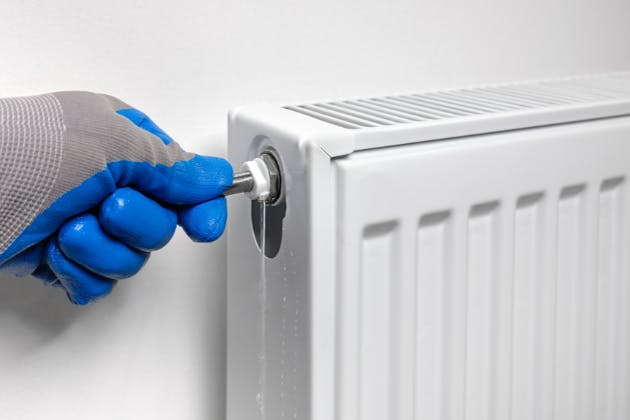
The bleed valve is usually at the top corner of the radiator, either on the left or right side. It will be a small square or slotted screw part, often with a round surround. On older radiators it may be painted over, so you might need to gently scrape paint away to see it clearly.
Make sure the thermostatic radiator valve (TRV) or manual valve at the bottom is fully open. This helps air and water move freely when you bleed the radiator.
Step 2: Prepare for drips
Place your bowl or container directly beneath the bleed valve, or as close as you can. Hold a cloth around the valve to catch any water that escapes and to protect the wall. Insert the radiator key or screwdriver into the valve so you are ready to turn it smoothly.
Step 3: Gently release the trapped air
Turn the key or screwdriver slowly anticlockwise, usually no more than a quarter to half a turn. You should hear a gentle hissing sound as air escapes. Keep hold of the key and do not remove it while the valve is open.
Allow the air to escape steadily. Avoid opening the valve too far or too quickly, as this can cause water to spray rather than drip. If water starts to come out forcefully, close the valve slightly and control the flow.
Step 4: Know when to stop
Continue to bleed the radiator until a steady, continuous stream of water flows out with no spluttering. This means the trapped air has been released and only water remains at the top of the radiator.
Once the water runs smoothly, turn the valve clockwise to close it firmly, but do not overtighten. Wipe away any drips and check for leaks around the valve. Repeat the process for other radiators that need bleeding, usually starting with those on the top floor and working down.
Step 5: Re-pressurise a combi boiler system
If you have a combi boiler or sealed system, bleeding radiators can cause the boiler pressure to drop. After bleeding, check the pressure gauge on the boiler front. Most systems should be around 1.0 to 1.5 bar when cold, but always refer to your boiler manual.
To top up the pressure, locate the filling loop, which is usually a small flexible silver hose with a tap or lever at each end. Slowly open the taps so water enters the system and watch the pressure gauge carefully. Once it reaches the recommended level, close both taps fully. If the pressure keeps dropping over the next few days, there may be a leak or another issue that needs professional attention.
When bleeding does not fix the problem
If a radiator is cold at the bottom after bleeding, or only warms up a little, the problem may be sludge rather than air. Sludge is a build-up of rust and debris that settles at the base of the radiator and blocks hot water flow.
Other possible issues include a stuck TRV that will not open properly, an imbalanced system where some radiators get more flow than others, or a circulation problem with the pump. In these cases, further DIY is limited and specialist equipment is often needed.
For Aylesbury-area homes, especially older heating systems, a professional system balance or a power flush to clear sludge can make a big difference to comfort and efficiency.
Bleeding radiators: quick FAQ
How often should I bleed my radiators?
Most homes only need radiators bleeding once a year, typically at the start of the heating season. If you frequently need to bleed them, there may be an underlying problem such as a system leak or corrosion that needs investigation.
Can I bleed a radiator while the heating is on?
It is strongly recommended that you do not. Bleeding radiators while the heating is on can release very hot water under pressure, increasing the risk of burns. Always switch the heating off and allow time for the system to cool before you start.
What if the bleed valve is stuck or leaking?
If the valve will not turn, do not force it, as it may snap or start to leak. A weeping or damaged valve should be replaced, which usually means draining part of the system. This is a job best left to a qualified heating engineer.
When to call a Gas Safe engineer
If your radiators stay cold after careful bleeding, your boiler pressure drops repeatedly, or you suspect sludge or pump issues, it is time to get a professional involved. Any work involving the boiler internals, gas supply or major system alterations must be carried out by a Gas Safe registered engineer.
For persistent radiator problems, suspected sludge in an older Aylesbury-area system, or ongoing pressure loss, contact Plumbing & Heating Surgeons on 01296200240. Our experts can diagnose the root cause, carry out boiler repairs, and advise on options such as balancing, valve replacement or power flushing to get your heating working properly again.