Blog
Frozen Condensate Pipe? Safe Steps to Get Your Heating Working Again
Practical, safety‑first advice to deal with a frozen condensate pipe and get your boiler running again during cold weather.

Cold snaps can quickly expose weak spots in your heating system, and one of the most common issues is a frozen condensate pipe. Knowing what it is, how to spot the signs, and the safe way to deal with it can save you a lot of stress when your boiler suddenly shuts down.
What a condensate pipe does in your boiler
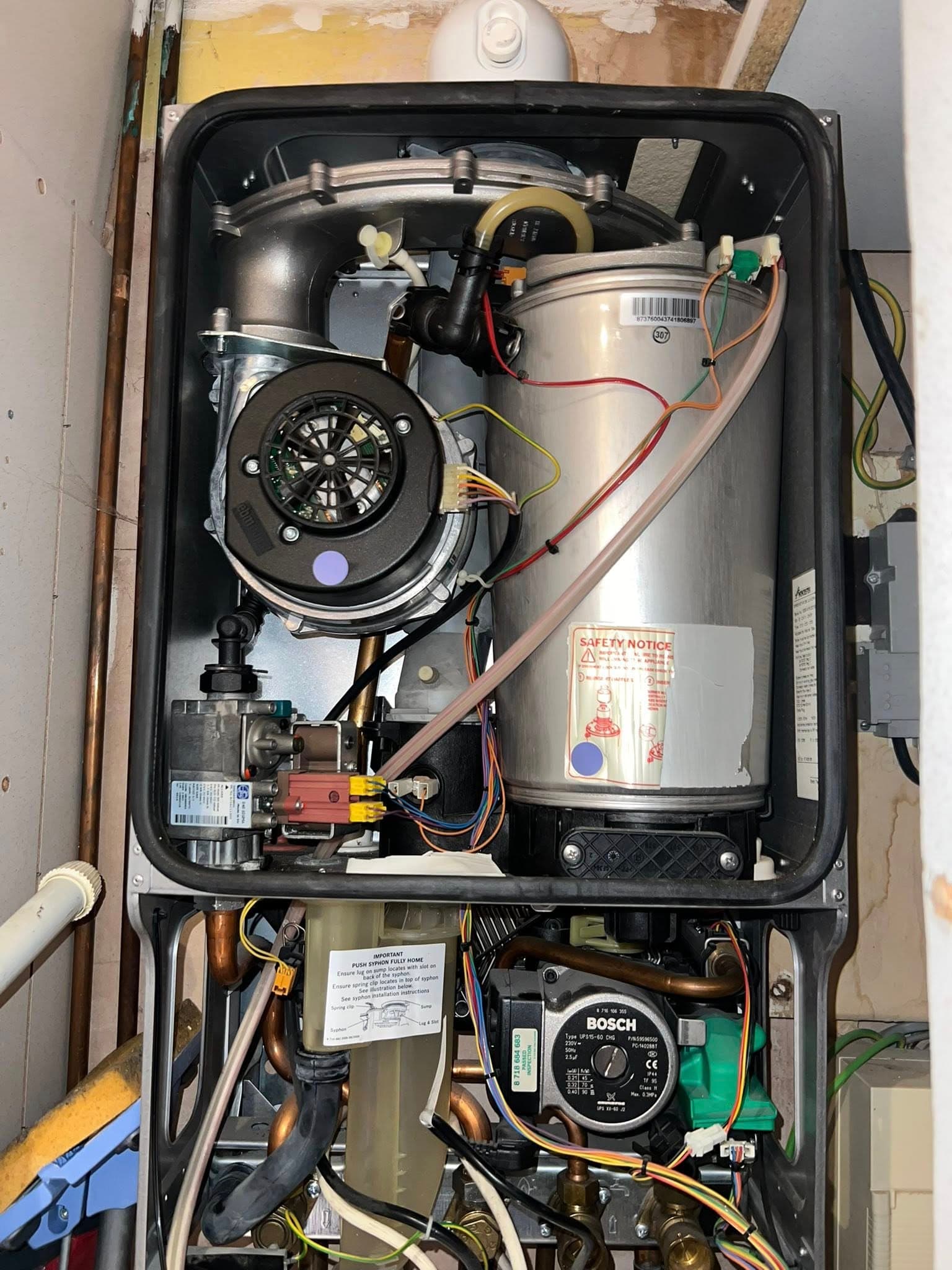
Most modern gas boilers are condensing boilers, designed to be more efficient by extracting extra heat from the flue gases. This process creates slightly acidic water called condensate, which needs to be drained away safely.
The condensate pipe is a small plastic pipe, usually white or light grey, that carries this waste water from the boiler to an internal waste pipe or an outside drain. If this pipe becomes blocked, your boiler will usually shut itself down to protect internal components.
Reasons condensate pipes freeze and common warning signs
Condensate pipes most often freeze during sharp drops in temperature. Any section of pipe that runs outside or through an unheated space is at higher risk, especially if it is uninsulated or too small in diameter.
This issue mainly affects condensing boilers because they produce far more condensate than older, non-condensing models. The flow is often a trickle, so in freezing air the condensate can turn to ice and gradually build up a blockage.
Gurgling or trickling noises from the boiler before it locks out
Boiler fault code or lockout light that resets but then returns
No heating and/or no hot water even though the controls are calling for heat
Drips or small leaks from joints in the condensate pipe as ice expands
External pipe runs, long horizontal sections and pipes on cold north-facing walls are particularly vulnerable. Where possible, condensate should discharge internally, but many homes still have pipes terminating outside.
Staying safe before you start any DIY steps
Safety must come first whenever you are dealing with anything connected to your boiler. You should only attempt very simple, external checks and thawing methods that do not involve opening the boiler or touching gas components.
If you can hear a hissing sound, or feel unsure about what you are looking at, stop immediately and contact a Gas Safe registered engineer. Never attempt to take the boiler casing off yourself.
How to safely thaw a frozen condensate pipe
If you feel confident, you can often safely clear a frozen external condensate pipe using gentle heat. Take your time and do not force anything, as plastic pipework can be brittle in low temperatures.
Step 1: Locate the condensate pipe
Inside, find the small plastic pipe coming from the bottom of your boiler. Follow it to see where it runs. Outside, it will usually exit the wall and run to a drain or soil pipe.
Look for sections that are exposed to the air and feel them gently with your hand. A very cold, solid-feeling section, often with a visible build-up of ice, is likely where it has frozen.
Step 2: Apply gentle, warm heat
Use one of the following safe methods to warm the frozen section gradually:
Warm (not boiling) water: Fill a jug or watering can with warm tap water and slowly pour it along the frozen pipe, starting from the outlet and working back towards the wall.
Hot water bottle: Wrap a hot water bottle in a towel and hold it against the frozen section for several minutes.
Warm towels: Soak towels in warm water, wring them out, then wrap them carefully around the pipe.
Repeat gently until the ice has melted. You may hear water draining or see it running into the drain as the blockage clears.
Step 3: Reset the boiler correctly
Once you are confident the pipe is clear, check your boiler’s manual for the correct reset procedure. Most boilers have a dedicated reset button that needs to be held for a few seconds.
After resetting, give the boiler a few minutes to cycle through its checks. If it fires up and the fault code disappears, you have likely cleared the problem.
Step 4: Watch for re-freezing
Keep an eye on the boiler and the pipework for the next few hours. If temperatures are still very low, ice can re-form, especially on thin, uninsulated pipe sections.
If the fault returns quickly or the boiler repeatedly locks out, do not keep resetting it. Repeated lockouts suggest an underlying issue that needs a professional inspection.
Safety warnings you should never ignore
There are some methods that may seem like a quick fix but can be extremely unsafe or cause lasting damage to your system. These should always be avoided.
Never use a blowtorch, heat gun, or any naked flame on plastic pipework. Do not pour kettles of boiling water directly over the pipe, as this can warp or crack the plastic and create leaks.
If you suspect any gas issue, a problem inside the boiler, or you feel out of your depth at any point, stop and contact a qualified engineer. Your safety and your home are far more important than a quick thaw.
Reducing the risk of frozen condensate in future
Once your heating is back on, it is worth taking steps to minimise the chances of another frozen condensate during the next cold snap. Some measures are simple; others require a professional.
Adding proper insulation to external sections of condensate pipe can significantly slow down freezing. Specialist weatherproof insulation is best, and it should cover all exposed runs, particularly elbows and joints.
Where possible, upgrading to a larger diameter external pipe gives the condensate more room to flow and makes it less likely to freeze solid. Rerouting the pipe so that it terminates internally, for example into a sink waste, can also greatly reduce risk.
In very exposed locations, condensate trace heating can be fitted. This is an electrically heated cable that runs along the pipe and helps keep it above freezing. Trace heating should always be installed by a qualified heating engineer, and your system checked to ensure it is suitable.
When to call us for expert help
There are times when a frozen condensate is a symptom of a wider problem, or the pipework is simply not safely accessible. In these situations, it is safer and more effective to call in a professional.
You should contact an engineer if your condensate pipe freezes repeatedly during every cold snap, if you notice damage, splits or leaks from the pipe, or if the route is high up, difficult to reach, or runs through a roof space. Persistent lockouts even after you have safely thawed the pipe also point to a fault that needs proper investigation.
Plumbing & Heating Surgeons can help with urgent boiler repairs, check and upgrade your condensate pipework, and keep your boiler running efficiently with regular boiler servicing. We can also advise on wider heating services to improve reliability and comfort in your home.
If your boiler is locked out or you are worried about a frozen condensate pipe, call Plumbing & Heating Surgeons on 01296200240 to book an urgent boiler repair and get your heating safely back on.
Other Articles