Blog
Boiler kettling explained: causes, risks, next steps
If your boiler has started to sound like a boiling kettle or a whistling teapot, it is trying to tell you something. Those unusual noises are called boiler kettling, and while they are common, they should never be ignored.
What boiler kettling actually is
Boiler kettling is the term heating engineers use for loud bubbling, banging or whistling noises coming from a boiler. It often sounds as if the water inside is boiling hard, even though boilers are designed to heat water below boiling point.
These noises usually mean that water is struggling to move through the system properly or is getting too hot in one area. Over time, this can put extra strain on key components and reduce the efficiency of your heating.
Common causes of boiler kettling
Several issues can lead to kettling, and more than one may be present at the same time. An engineer will normally check each of these in turn to find the root cause rather than just treating the noise itself.
Limescale in hard water areas
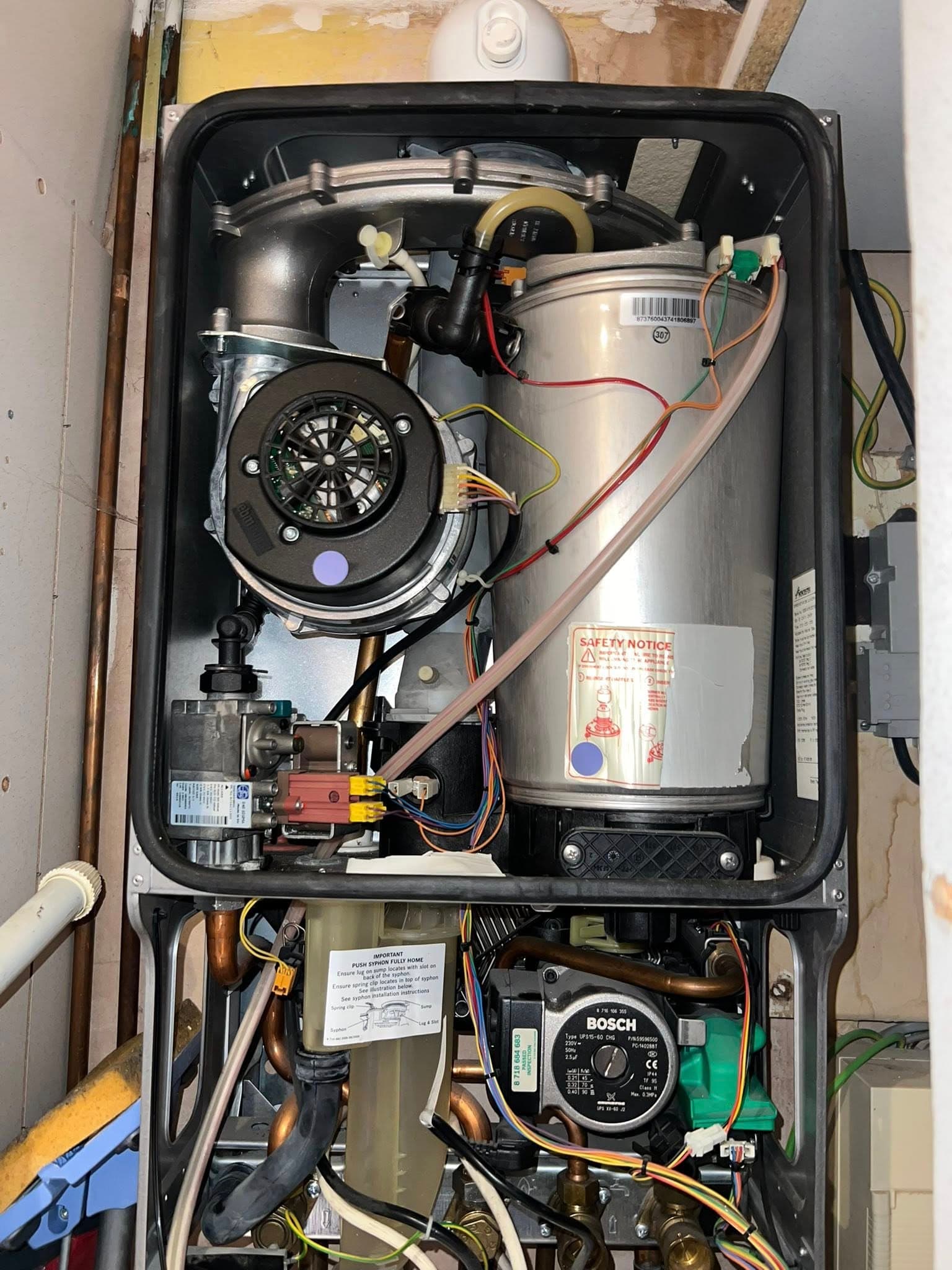
If you live in a hard water area, limescale can build up inside your boiler, especially on the heat exchanger. This is the part that transfers heat from the gas flame to the water.
When limescale coats the metal, it creates hot spots. Water on those hot spots can start to boil locally, producing steam bubbles, rumbling and whistling, just like a kettle on the hob.
Restricted flow and sludge build up
Anything that restricts the flow of water can also trigger kettling. Sludge, which is a mix of rust, dirt and debris from radiators and pipework, can collect at low points in the system.
As sludge builds up, it narrows the pipes and radiators so the pump has to work harder to push water around. The slower the flow, the easier it is for water to overheat inside the boiler.
Sludge blocking radiators or pipework
Partially closed radiator valves
Clogged system filters or strainers
Incorrectly balanced heating system
Faulty pump or valves
A failing circulation pump may not move water at the correct speed, causing hot water to linger in the boiler rather than flowing away. This can quickly lead to kettling noises, especially when the heating first comes on.
Sticking or faulty motorised valves can have a similar effect. If they do not open fully, they restrict flow and may cause some parts of the system to overheat while others stay cold.
Incorrect boiler settings
Sometimes the boiler itself is working, but its settings are not suitable for the system. If the flow temperature is set too high, the water may be heated faster than it can circulate, which encourages kettling.
On modern boilers, incorrect settings on the control panel or room thermostat can also cause the boiler to cycle on and off too frequently. This repeated stop/start behaviour puts extra stress on internal components.
Risks of ignoring boiler kettling
A noisy boiler might still heat your home, but ignoring kettling usually makes the underlying problem worse. Over time, that can lead to bigger repair bills and a less reliable heating system.
Long term kettling can strain the heat exchanger, pump and other internal parts. It also tends to reduce efficiency, so you may end up burning more gas for the same amount of heat, which increases your energy bills.
In extreme cases, if overheating is not properly controlled, it can cause safety devices to trip frequently or components to fail completely. A boiler that keeps locking out should always be checked professionally.
Safety guidance if your boiler is kettling
Most kettling issues can be fixed, but it is important to treat them with respect. The boiler is a gas appliance, and opening or adjusting the wrong part can be dangerous.
Do not repeatedly reset the boiler to clear error codes. If it keeps locking out or shutting down, it is doing so for a reason, and forcing it to restart could cause further damage.
If the boiler becomes excessively noisy, smells odd, or you are worried at all, switch it off using the controls and turn off the mains power supply to the boiler. Do not attempt to open sealed covers or any part that requires tools to access.
What you can safely check yourself
There are a few basic checks you can do as a homeowner without taking anything apart. These can give useful clues and help your engineer diagnose the issue more quickly.
Checking the pressure gauge
Most modern boilers have a pressure gauge on the front. When the system is cold, many domestic systems operate best around 1 to 1.5 bar, although you should always follow the manufacturer guidance.
If the pressure is very low or repeatedly drops, there may be a leak or another issue that affects flow. If it is consistently too high, do not try to drain water yourself; mention it to your engineer.
Feeling for radiator heat consistency
With the heating on, carefully feel your radiators from top to bottom. Cold spots at the bottom can suggest sludge, while radiators that are hot at the top and cold at the bottom may need bleeding or further investigation.
If some radiators are much cooler than others or never get properly warm, it can indicate a circulation problem linked to kettling noises.
Listening on a combi boiler
If you have a combi boiler, note whether the noise changes when you run a hot tap. A boiler that rumbles mainly when heating hot water, rather than when the heating is on, can point to specific issues with the domestic hot water side.
Make a note of what you hear and when it happens. Sharing these details with your heating engineer can speed up diagnosis.
Note when the noise starts and stops
Record if it is louder with heating or hot water
Check pressure when the system is cold
How engineers typically fix boiler kettling
Kettling is usually fixable with the right approach. A qualified Gas Safe registered engineer will assess the whole system, not just the boiler, to treat both the symptoms and the cause.
System cleaning and power flushing
If sludge and debris are the main culprits, the engineer may recommend a chemical clean or a power flush. This process circulates cleaning chemicals through the system to break up sludge and remove it from radiators and pipework.
Once cleaned, the system is usually refilled with inhibitor chemicals to slow future corrosion and help keep kettling at bay.
Magnetic filters and water treatment
To protect your boiler after a clean, many engineers fit a magnetic filter on the pipework. This catches rust particles before they reach the boiler, which helps prevent future blockages and internal damage.
In hard water areas, your engineer may also suggest additional water treatment, such as scale reducers, to reduce limescale build up on the heat exchanger.
Component checks and replacements
Depending on what they find, the engineer may adjust your boiler’s settings, replace a worn pump, free up or change sticking valves, or replace a scaled or damaged heat exchanger. All of this work should be carried out by a qualified professional.
Once the system is flowing properly and the boiler is correctly set up, the kettling noise should reduce or disappear, and your boiler will usually run more efficiently.
Next steps if your boiler is kettling
If you are hearing boiling, banging or whistling from your boiler, it is best to act sooner rather than later. Switching a noisy boiler off and getting professional help can protect both your safety and your wallet.
Addressing kettling not only quietens your boiler, it can improve efficiency and reduce the risk of future breakdowns by tackling sludge, limescale and circulation problems before they get worse.
For friendly, expert help, contact Plumbing & Heating Surgeons to book a boiler repair visit on 01296200240. A qualified engineer can inspect your system, explain what is going on in plain English, and get your heating running smoothly again.
Other Articles